

Specialty
Orthopedic care built around function, mobility and the right diagnosis.
Orthopedic treatment starts from what you cannot do rather than from what an image shows. Pain, stiffness and instability have several possible causes, and the diagnosis determines whether the answer is rehabilitation, an injection, or surgery.

A clearer view
Understanding Orthopedics
Imaging findings and symptoms often disagree. Changes visible on a scan are common in people with no pain at all, which is why an orthopedic assessment weighs the examination and your functional limitations alongside the images rather than treating the scan on its own.
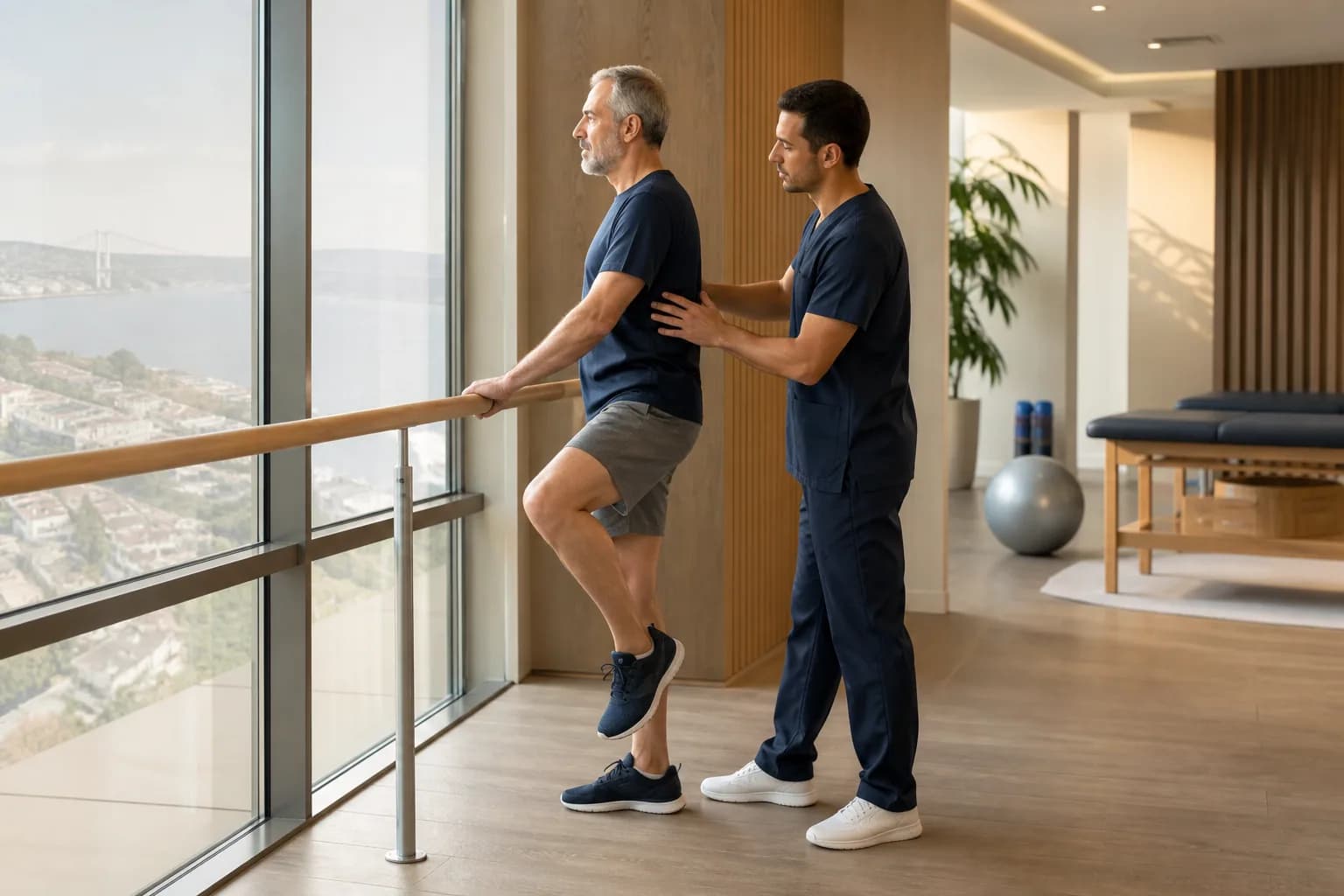
For a large share of orthopedic problems, structured non-surgical treatment is the first step, and for many people it is the last one needed. Where surgery is indicated, rehabilitation afterwards is not an optional extra — it is a substantial part of the result.
Treatment index
Treatments
Orthopedic treatment starts from what you cannot do rather than from what an image shows. Pain, stiffness and instability have several possible causes, and the diagnosis determines whether the answer is rehabilitation, an injection, or surgery.
Medical assessment and planning
An orthopedic assessment generally includes:
- the history of the problem: how it started, what worsens it, what you can no longer do
- a physical examination of the joint, the limb and the movement pattern around it
- imaging chosen to answer a specific question, not ordered by default
- a review of previous treatment, including physiotherapy already tried
- your general health and anything affecting anaesthesia, healing or rehabilitation
- a discussion of conservative options before surgical ones
How Wadi coordinates the journey
Wadi coordinates the practical side of an orthopedic journey, which usually involves a longer stay and mobility considerations: accessible accommodation, transfers that suit reduced mobility, appointment sequencing including early physiotherapy sessions, and communication with your team at home.
The diagnosis, the treatment decision and the rehabilitation protocol belong to the treating physician.
Common questions
Only when your surgical team says so. Air travel after lower-limb surgery carries specific considerations, including clot risk and mobility on the aircraft, so the return date is set by the treating team based on your recovery, not booked in advance around a guess.
Bring what you already have — reports and images both. They may prevent repeat imaging and they help the assessment. The treating institution decides whether new imaging is still needed.
It depends on the procedure and on you. For many orthopedic operations rehabilitation continues for weeks to months after you return home, so the plan should tell you what needs to happen locally before you travel.
Not sure where to start?
Describe what you are experiencing and a coordinator will explain which specialty usually handles it.
This content is for general information and does not replace an individual medical assessment. Treatment suitability, technique, expected recovery and possible risks vary by patient and must be evaluated by a qualified physician.
Orthopedics