

Orthopedics
Scoliosis and kyphosis: treatment depends on age, severity and progression.
Spinal curvature covers a range of conditions and severities. Management runs from observation, through physiotherapy-based approaches and bracing, to surgery — and which applies depends on the diagnosis, the degree of curve, skeletal maturity and symptoms.
Receive information about the coordination process and the healthcare partners available for your request.
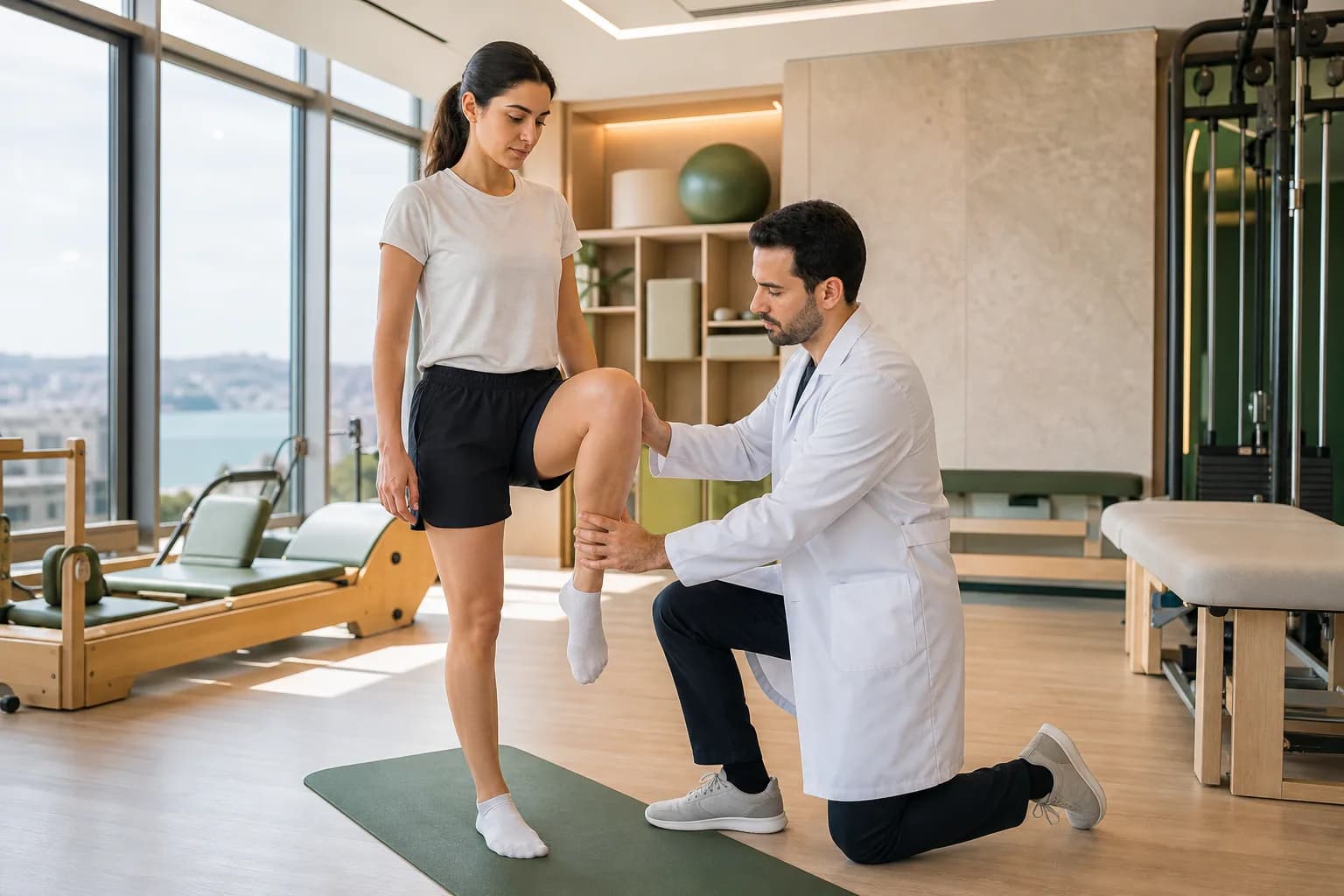 Orthopedics
At a glance
Quick facts
- Treatment type
- Orthopedic; surgical or non-surgical depending on diagnosis
- Typical care setting
- Licensed hospital with orthopedic and rehabilitation services
- Anaesthesia
- If applicable, determined by the surgical and anaesthesia team
- Hospital stay
- Varies by procedure and case
- Rehabilitation
- Individualized; a substantial part of the outcome
- Follow-up
- Required as advised by the treating physician
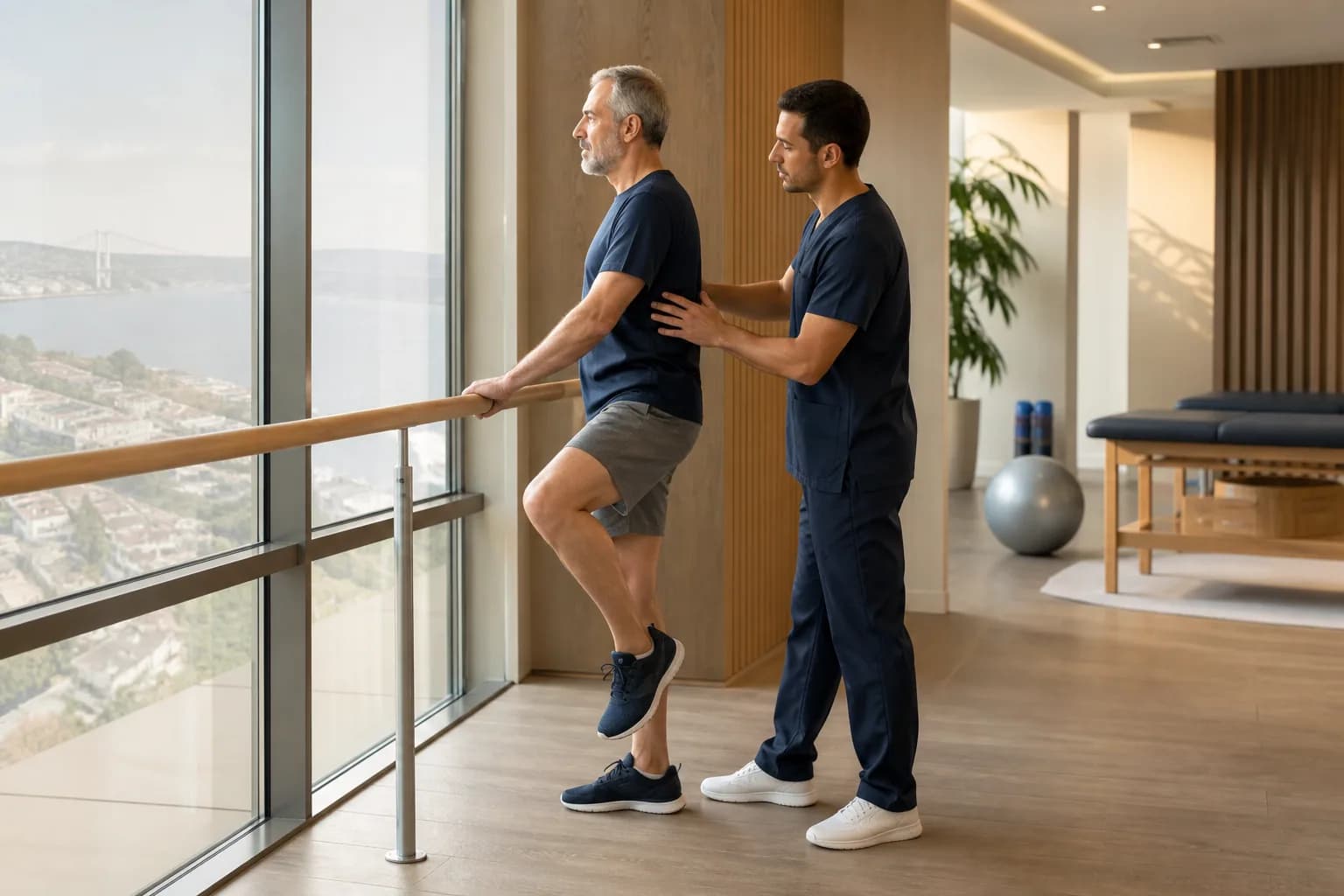
What is this treatment?
Scoliosis is a sideways curvature with rotation; kyphosis is an increased forward curve of the upper spine. Both have several types and causes, including idiopathic, congenital, neuromuscular and degenerative forms, and the type materially changes the management.
Why might it be considered?
Assessment is sought for a visible curve, back pain, a curve identified during screening, progression over time, or — in more severe cases — effects on breathing and function.
Who may or may not be a suitable candidate?
There is no single treatment for “curvature”. In a growing adolescent with a moderate curve the priority is monitoring and preventing progression; in a mature spine with a stable curve, symptom management may be the whole plan.
Medical assessment and planning
Assessment includes clinical examination, measurement of the curve on standing radiographs, assessment of skeletal maturity in younger patients, and evaluation of symptoms and progression over time.
How the treatment generally works
Depending on findings, management may involve:
- observation with planned re-assessment where the curve is mild or non-progressive
- specific physiotherapeutic exercise approaches
- bracing in growing patients with curves in the relevant range
- surgery in selected cases with severe or progressive curves, or where symptoms justify it
Preparation
Bring previous radiographs — the comparison over time is often more informative than any single image. Note when the curve was first identified and any recorded measurements.
Recovery and what to expect
Non-surgical management is continuous rather than an event. Where surgery is performed, recovery is prolonged with a staged return to activity guided by the surgical team.
Risks and important considerations
Spinal surgery risks include bleeding, infection, neurological injury, implant-related problems, non-union, persistent pain, the need for further surgery, and anaesthetic risk. These are discussed in detail relative to the specific procedure.
Alternatives and related options
Observation and physiotherapy-led approaches are appropriate for many curves and are not a lesser option — they are the correct treatment where the criteria for surgery are not met.
International travel considerations
Serial monitoring is best delivered where you live. An international visit is well suited to assessment and a second opinion; ongoing bracing and physiotherapy are not.
How Wadi coordinates the journey
Medical assessment, diagnosis and treatment are provided by the relevant licensed healthcare institution and physician. Wadi Health Tourism coordinates the international patient journey and related intermediary services.
Common questions
No. Many curves are monitored or treated non-surgically. Surgery is considered for specific severities and situations, not for the presence of a curve as such.
Specific physiotherapeutic approaches have a role in management, particularly in growing patients, but claims that exercise reliably reverses an established structural curve go beyond the evidence.
Yes. Change over time is one of the most important pieces of information in this diagnosis, and old images make the assessment considerably more useful.
Related treatments
Sports medicine
Sports medicine treats injuries to muscles, tendons, ligaments and joints, and most of that treatment is not surgical. The goal is a return to activity at a level and timescale the tissue can support.
Sports medicineOrthopedicsArthroscopic surgery
Arthroscopy lets a surgeon look inside a joint through small incisions and treat certain problems found there. Whether it helps depends entirely on what is wrong — for some conditions it is effective, for others it is not.
Arthroscopic surgeryAwaiting medical review
This page has been prepared by the editorial team and is queued for review by a qualified physician. It is published for information and is not indexed until that review is complete.
Last updated September 1, 2026
This content is for general information and does not replace an individual medical assessment. Treatment suitability, technique, expected recovery and possible risks vary by patient and must be evaluated by a qualified physician.
Start with a simple conversation.
Receive information about the coordination process and the healthcare partners available for your request.
We do not publish treatment prices. Any estimate depends on an individual clinical assessment and is provided by the treating healthcare institution.