

Specialty
Hair restoration begins with a diagnosis, not a technique.
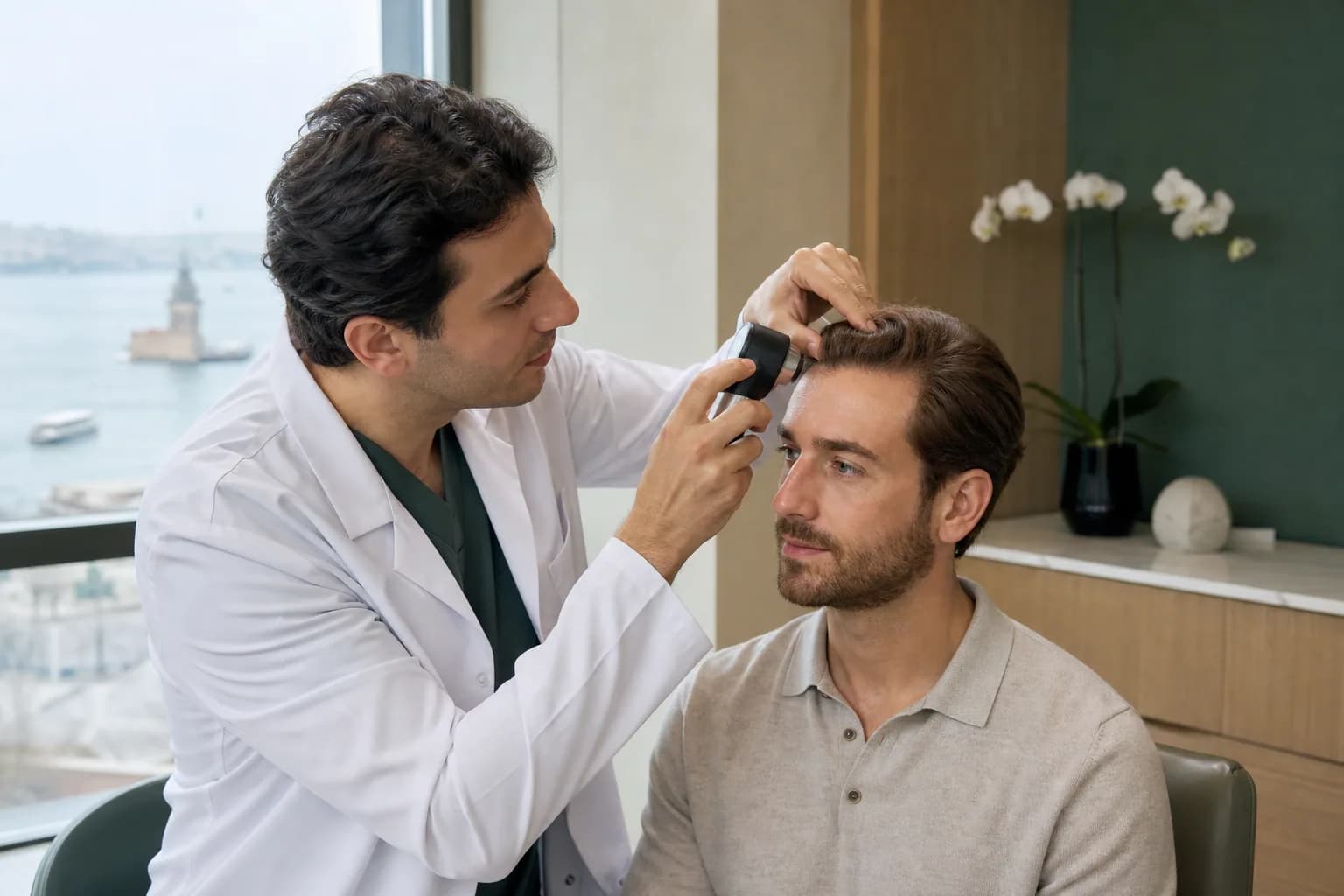
Hair loss is a medical condition with several possible causes, and the cause changes the answer. Assessment comes first: the pattern and stage of loss, the donor area, your general health, and whether medical treatment, a procedure, or a combination is appropriate.

A clearer view
Understanding Hair restoration
A transplant redistributes hair you already have. It does not create new follicles, which is why the donor area sets the ceiling on what any plan can achieve, and why a realistic conversation about density is more useful than a promised graft number.
Most hair loss is progressive. A plan that treats only today’s pattern can look unnatural in ten years, so a competent assessment considers where the loss is likely to go, not only where it currently is.
Some causes of hair loss are not surgical at all — thyroid disease, iron deficiency, medication effects, inflammatory scalp conditions and stress-related shedding among them. These need diagnosis and medical treatment, not a procedure.
Treatment index
Treatments
Hair loss is a medical condition with several possible causes, and the cause changes the answer. Assessment comes first: the pattern and stage of loss, the donor area, your general health, and whether medical treatment, a procedure, or a combination is appropriate.
Medical assessment and planning
A proper hair restoration assessment usually covers:
- the pattern, stage and rate of loss, and how long it has been happening
- the density and quality of the donor area, which limits what is possible
- scalp health and any inflammatory or scarring condition
- family history and, where relevant, hormonal and nutritional factors
- medical treatments that may need to run alongside or instead of a procedure
- realistic coverage goals for your specific donor supply, and whether more than one session is likely
How Wadi coordinates the journey
Wadi coordinates the assessment appointment, the treatment day schedule, accommodation suited to the first nights after a procedure, transfers, and the follow-up communication that matters most in the first months.
Whether you are a candidate, which technique is appropriate and how many sessions are needed are clinical decisions made by the treating physician.
Common questions
Transplanted hair usually sheds before it regrows, and visible change develops over months rather than weeks. Your treating team will describe the expected timeline for your case; anyone promising a fast visible result is not describing how hair grows.
Sometimes, and sometimes not. It depends on the area to be covered, your donor supply and whether the underlying loss continues. This should be discussed honestly before the first session, not after it.
Often yes. A transplant does not stop the process causing the original loss, so physicians frequently recommend continuing medical management to protect the hair you still have. That is a prescription decision for your doctor.
Not sure where to start?
Describe what you are experiencing and a coordinator will explain which specialty usually handles it.
This content is for general information and does not replace an individual medical assessment. Treatment suitability, technique, expected recovery and possible risks vary by patient and must be evaluated by a qualified physician.
Hair restoration