

Specialty
Dental care for international patients, coordinated from planning to follow-up.
Dental treatment abroad works when the diagnosis comes first and the schedule follows it. A restoration placed on an untreated problem fails; an examination and imaging determine what is actually needed before any appointment is booked.
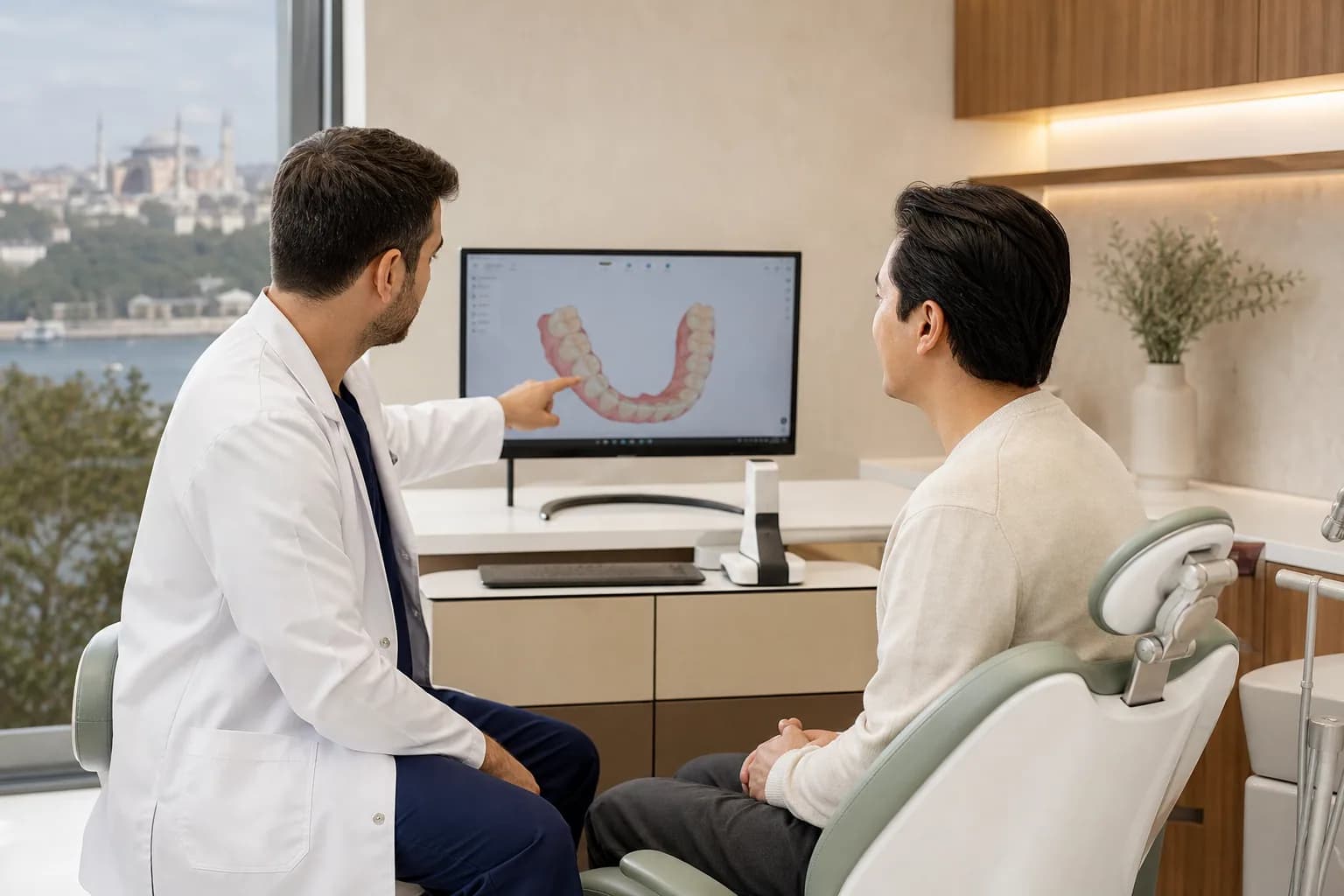

A clearer view
Understanding Dentistry
Dental treatment is sequential. Gum health, decay, root problems and bite mechanics are assessed and addressed in an order the mouth dictates, and skipping a step to fit a travel window is how avoidable failures happen.
Long-term outcome also depends on maintenance after you return home. A restoration is not a permanent object; it is something that needs cleaning, checking and occasional repair for as long as you have it.
Treatment index
Treatments
Dental treatment abroad works when the diagnosis comes first and the schedule follows it. A restoration placed on an untreated problem fails; an examination and imaging determine what is actually needed before any appointment is booked.
Medical assessment and planning
A first dental assessment for an international patient usually includes:
- a clinical examination of teeth, gums and soft tissue
- imaging appropriate to the case, such as a panoramic radiograph or a CBCT scan
- assessment of gum health, because unstable gums compromise any restoration placed on them
- a review of your bite and how your teeth meet
- your medical history, medications and habits such as grinding or smoking
- a treatment sequence with the number of visits it genuinely needs
Where a case can be completed within one trip, the plan will say so. Where it cannot — implants that need healing time being the usual example — a plan spread across two visits is the honest answer.
How Wadi coordinates the journey
Wadi coordinates appointment sequencing across a trip, accommodation near the treating clinic, transfers on treatment days and communication in your language, including relaying questions between visits.
Diagnosis, the treatment plan, the materials chosen and the clinical sequencing are decided by the treating dentist and the healthcare institution.
Common questions
Some cases can. Others cannot, because biology sets the pace — implants need time to integrate with bone, and gum treatment needs a healing interval before restorations are made. The examination determines which situation applies to you.
Ask this before you agree to treatment. A clear plan states who you contact, what documentation you receive, what is covered by the treating institution and what would need attention from a dentist where you live. We help route that communication.
Often it helps, and existing images can make the first assessment more useful. They are collected through a secure link with your explicit consent, and the treating clinic decides whether new imaging is still required on arrival.
Not sure where to start?
Describe what you are experiencing and a coordinator will explain which specialty usually handles it.
This content is for general information and does not replace an individual medical assessment. Treatment suitability, technique, expected recovery and possible risks vary by patient and must be evaluated by a qualified physician.
Dentistry