

Dentistry
Veneers and crowns: choose the restoration that fits the tooth, not the trend.
A veneer covers the front surface of a tooth; a crown covers the whole tooth. They solve different problems, remove different amounts of tooth structure, and the choice between them is a diagnosis, not a style decision.
Receive information about the coordination process and the healthcare partners available for your request.
 Dentistry
At a glance
Quick facts
- Treatment type
- Dental
- Typical care setting
- Licensed dental clinic or hospital dental unit
- Anaesthesia
- Local, or as determined by the treating dentist
- Hospital stay
- Not usually required
- Recovery
- Individualized
- Follow-up
- Required as advised by the treating dentist

What is this treatment?
Both are restorations bonded or cemented onto prepared tooth structure. A veneer is a thin facing on the visible surface, used mainly where the underlying tooth is largely sound. A crown encases the tooth and is used where more structure is missing, damaged or weakened.
Why might it be considered?
Reasons include fractured or worn teeth, discoloration that does not respond to whitening, older restorations that have failed, shape or alignment concerns within limits, and protecting a tooth that has been structurally weakened.
Who may or may not be a suitable candidate?
Healthy gums and adequate remaining tooth structure matter more than the choice of material. Active decay, gum disease, untreated root problems, heavy grinding and an unstable bite are addressed first, because a restoration placed over an untreated problem fails.
Medical assessment and planning
Assessment involves examination, radiographs, evaluation of gum health and bite, and a discussion of what each option requires. The dentist should show you how much tooth preparation is involved before you agree.
How the treatment generally works
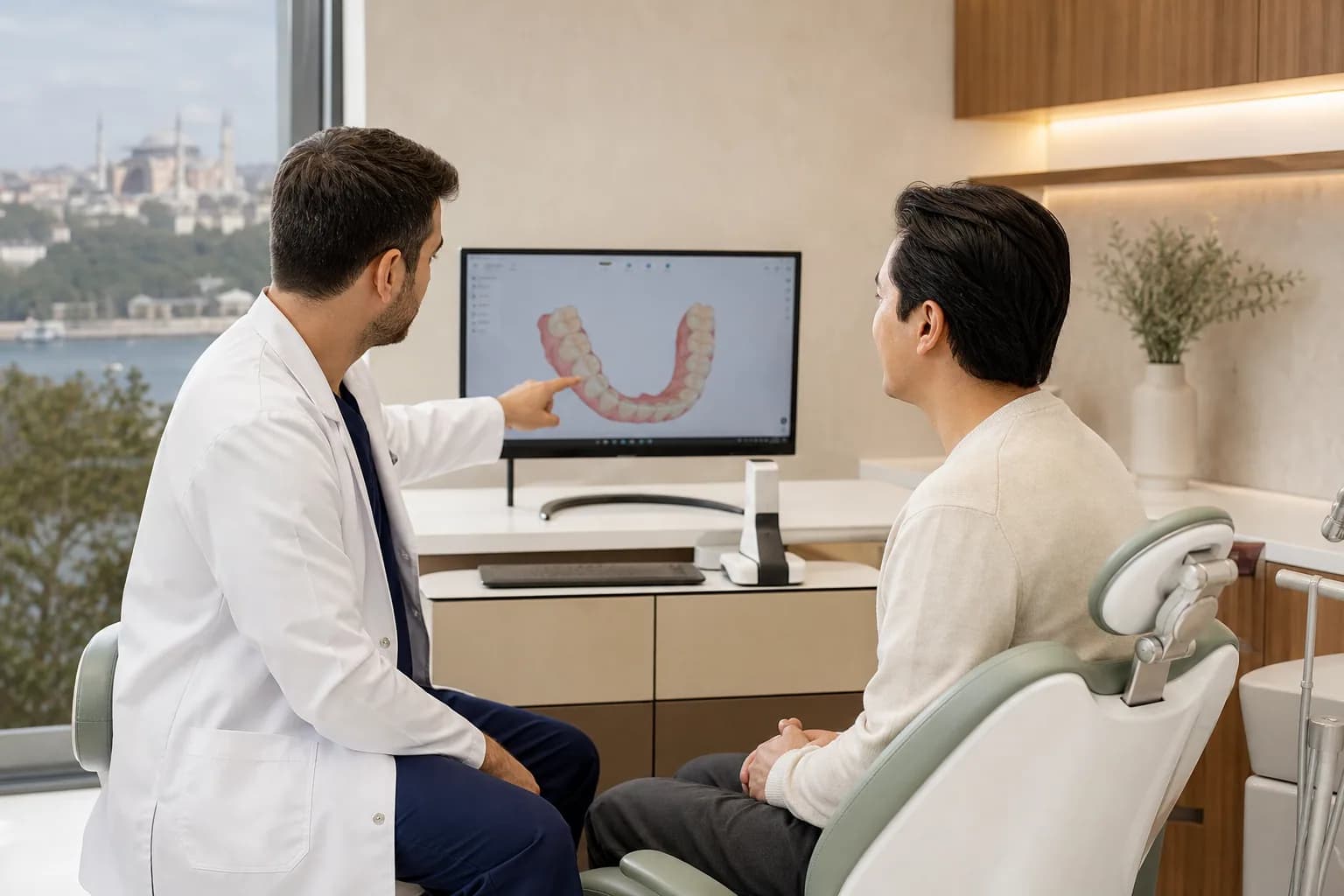
In general terms: the tooth is prepared, an impression or digital scan is taken, a temporary restoration may be fitted, the definitive restoration is made, then fitted and adjusted. Appointment spacing depends on the laboratory workflow and on your case.
Preparation
Bring existing radiographs and any records of previous dental work. Discuss grinding, sensitivity and any planned orthodontic or gum treatment before restorations are made, because those change the plan.
Recovery and what to expect
Temporary sensitivity and an adjustment period to the bite are common. Any persistent pain, high bite or gum irritation should be reviewed rather than tolerated.
Risks and important considerations
Risks include sensitivity, nerve inflammation that may later require root canal treatment, chipping or fracture of the restoration, debonding, gum irritation or recession at the margin, colour mismatch, and the need for replacement over time.
Alternatives and related options
Depending on the problem: whitening, composite bonding, orthodontic alignment, a partial restoration such as an onlay, or leaving a sound tooth alone. A dentist who offers only one answer to every presentation is not diagnosing.
International travel considerations
This treatment needs at least two stages and adequate time between them; a compressed schedule is a common cause of avoidable problems. Ask before travelling how many visits your plan requires and what happens if an adjustment is needed after you return home.
How Wadi coordinates the journey
Medical assessment, diagnosis and treatment are provided by the relevant licensed healthcare institution and physician. Wadi Health Tourism coordinates the international patient journey and related intermediary services.
Common questions
A veneer covers the front surface and preserves more tooth; a crown covers the whole tooth and is used when more structure is compromised. Which is appropriate depends on how much sound tooth remains.
Longevity varies with the material, the bite, oral hygiene, grinding and gum health. Restorations are not permanent and will need maintenance and eventual replacement; your dentist can describe what is realistic for your case.
Sometimes, but the examination decides that. If gum treatment, root treatment or orthodontic movement is needed first, compressing the schedule harms the result rather than saving time.
Related treatments
Smile design
“Smile design” describes a planning process, not a single treatment. Depending on the case it may involve gum treatment, orthodontics, restorative work, whitening, or a combination — and sometimes far less than a patient expected.
Smile designDentistryDental implants
An implant replaces the root of a missing tooth and supports a crown, bridge or denture. Whether it is possible depends on the bone available, the health of the surrounding gums, and factors that affect healing.
Dental implantsDentistryRoot canal treatment
Root canal treatment addresses infected or inflamed pulp inside a tooth. Its purpose is to keep a natural tooth that would otherwise need removal — not to improve appearance.
Root canal treatmentAwaiting medical review
This page has been prepared by the editorial team and is queued for review by a qualified physician. It is published for information and is not indexed until that review is complete.
Last updated September 1, 2026
This content is for general information and does not replace an individual medical assessment. Treatment suitability, technique, expected recovery and possible risks vary by patient and must be evaluated by a qualified physician.
Start with a simple conversation.
Receive information about the coordination process and the healthcare partners available for your request.
We do not publish treatment prices. Any estimate depends on an individual clinical assessment and is provided by the treating healthcare institution.