

Dentistry
Smile design is a plan — not a one-size-fits-all procedure.
“Smile design” describes a planning process, not a single treatment. Depending on the case it may involve gum treatment, orthodontics, restorative work, whitening, or a combination — and sometimes far less than a patient expected.
Receive information about the coordination process and the healthcare partners available for your request.
 Dentistry
At a glance
Quick facts
- Treatment type
- Planning process combining several dental treatments
- Typical care setting
- Licensed dental clinic or hospital dental unit
- Anaesthesia
- Local, or as determined by the treating dentist
- Hospital stay
- Not usually required
- Recovery
- Individualized
- Follow-up
- Required as advised by the treating dentist
What is this treatment?
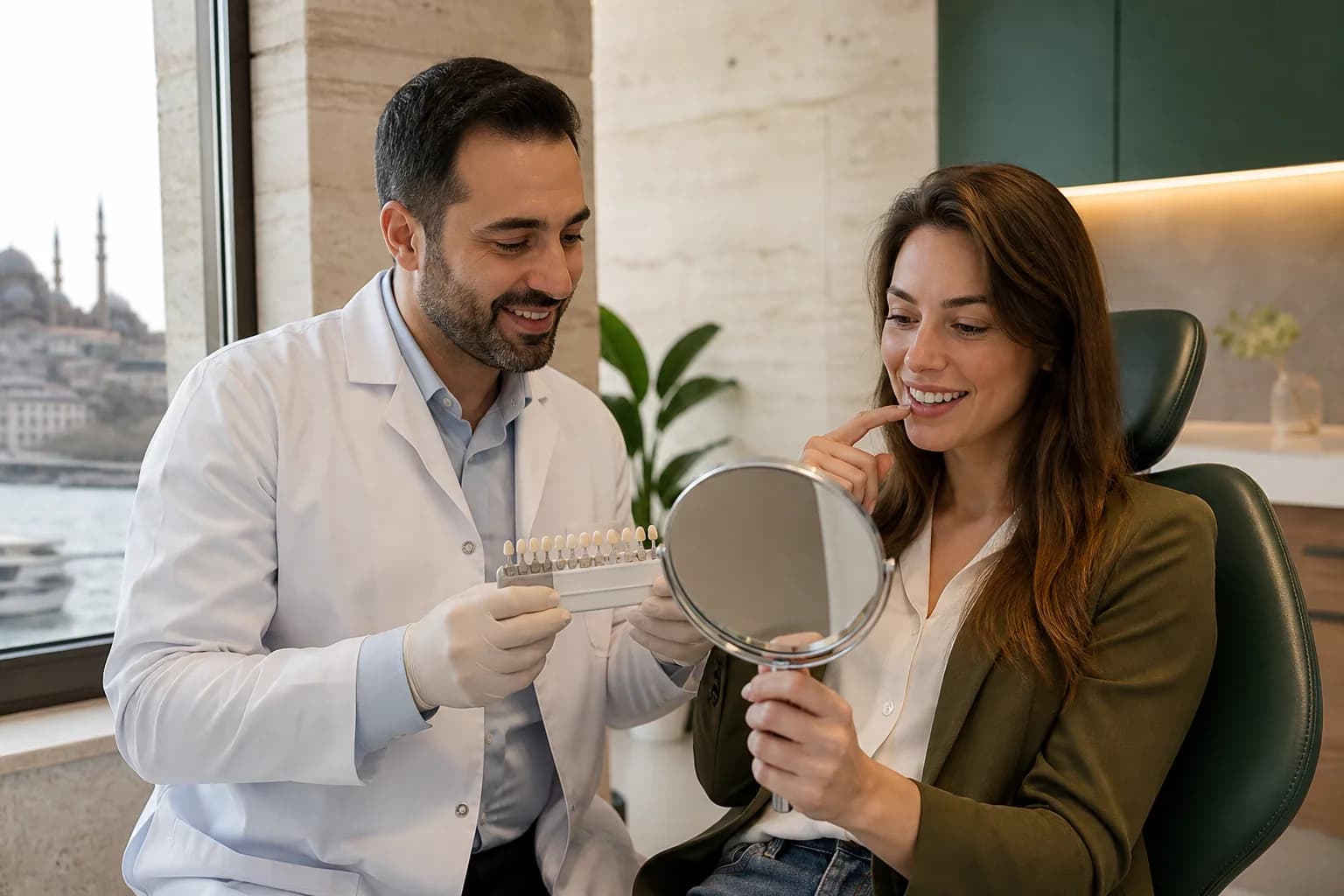
The dentist assesses the teeth, gums, bite, facial proportions and what you want to change, then proposes a sequence of treatments to reach an agreed outcome. The plan is the product; the individual procedures are steps within it.
Why might it be considered?
People ask about it when several concerns exist at once — colour, shape, spacing, worn edges, uneven gum levels — and want a coordinated plan rather than separate opinions on each.
Who may or may not be a suitable candidate?
A stable foundation comes first: healthy gums, no active decay, and a bite that will not destroy the result. Where alignment is the underlying issue, orthodontics is often the more conservative route than restoring every tooth.
Medical assessment and planning
Assessment usually includes photographs, radiographs, a bite analysis and sometimes a digital or physical mock-up. A mock-up illustrates a proposal; it is not a guaranteed outcome.
How the treatment generally works
Sequence follows biology: gum and disease control, then any orthodontic movement, then restorative work, then maintenance. Compressing that order to fit a trip is the most common reason results disappoint.
Preparation
Bring previous records, note what specifically you want changed, and be ready to discuss grinding and habits — they influence what will survive.
Recovery and what to expect
This depends entirely on which treatments the plan includes; each step has its own recovery and its own review point.
Risks and important considerations
Risks are those of the individual treatments included — irreversible tooth preparation, sensitivity, restoration failure, gum recession, relapse after orthodontics — plus the risk of an over-treated plan that removes more tooth structure than the problem required.
Alternatives and related options
Often a smaller intervention achieves most of what someone wants: whitening, minor bonding, or aligning teeth without restoring them. A good plan presents the conservative option even when a larger one is possible.
International travel considerations
A full plan rarely fits into one short visit. Ask for the number of stages, the interval between them, and what maintenance you will need at home before agreeing to anything.
How Wadi coordinates the journey
Medical assessment, diagnosis and treatment are provided by the relevant licensed healthcare institution and physician. Wadi Health Tourism coordinates the international patient journey and related intermediary services.
Common questions
No. It is a plan that may combine several treatments, and in some cases the appropriate plan is much smaller than the patient expected.
Only where a restoration is genuinely indicated, and the amount depends on the treatment chosen. Ask specifically how much preparation each option requires — the answers differ significantly.
It depends on the steps involved. Orthodontic movement and gum healing set the pace, and a plan that ignores them to fit a week is not a plan.
Related treatments
Veneers and crowns
A veneer covers the front surface of a tooth; a crown covers the whole tooth. They solve different problems, remove different amounts of tooth structure, and the choice between them is a diagnosis, not a style decision.
Veneers and crownsDentistryDental implants
An implant replaces the root of a missing tooth and supports a crown, bridge or denture. Whether it is possible depends on the bone available, the health of the surrounding gums, and factors that affect healing.
Dental implantsDentistryRoot canal treatment
Root canal treatment addresses infected or inflamed pulp inside a tooth. Its purpose is to keep a natural tooth that would otherwise need removal — not to improve appearance.
Root canal treatmentAwaiting medical review
This page has been prepared by the editorial team and is queued for review by a qualified physician. It is published for information and is not indexed until that review is complete.
Last updated September 1, 2026
This content is for general information and does not replace an individual medical assessment. Treatment suitability, technique, expected recovery and possible risks vary by patient and must be evaluated by a qualified physician.
Start with a simple conversation.
Receive information about the coordination process and the healthcare partners available for your request.
We do not publish treatment prices. Any estimate depends on an individual clinical assessment and is provided by the treating healthcare institution.