

Hair restoration
Hair transplantation starts with donor-area planning and realistic density goals.
A transplant moves hair follicles from a donor area to a thinning one. It redistributes the hair you have rather than creating new hair, so the donor area sets the limit on what any plan can achieve.
Receive information about the coordination process and the healthcare partners available for your request.
 Hair restoration
At a glance
Quick facts
- Treatment type
- Surgical, day procedure
- Typical care setting
- Licensed clinic or hospital
- Anaesthesia
- Local, as determined by the treating physician
- Hospital stay
- Not usually required
- Visible result
- Develops over months; shedding before regrowth is expected
- Follow-up
- Required as advised by the treating physician

What is this treatment?
Follicular units are taken from an area where hair is genetically less prone to loss and placed in the thinning area. Extraction and placement techniques differ, and which is used is a clinical decision made after examining your donor area.
Why might it be considered?
It is discussed for pattern hair loss, for scarring alopecia in selected stable cases, for restoring a hairline within realistic limits, and sometimes for eyebrow or beard restoration.
Who may or may not be a suitable candidate?
A physician assesses:
- the cause of the loss — not all hair loss is suitable for transplantation
- donor density and quality, which sets the ceiling on coverage
- the stage and expected progression of the loss
- scalp health, including any inflammatory or scarring condition
- general health, medications and conditions affecting healing
- whether expectations match what your donor supply can deliver
Medical assessment and planning
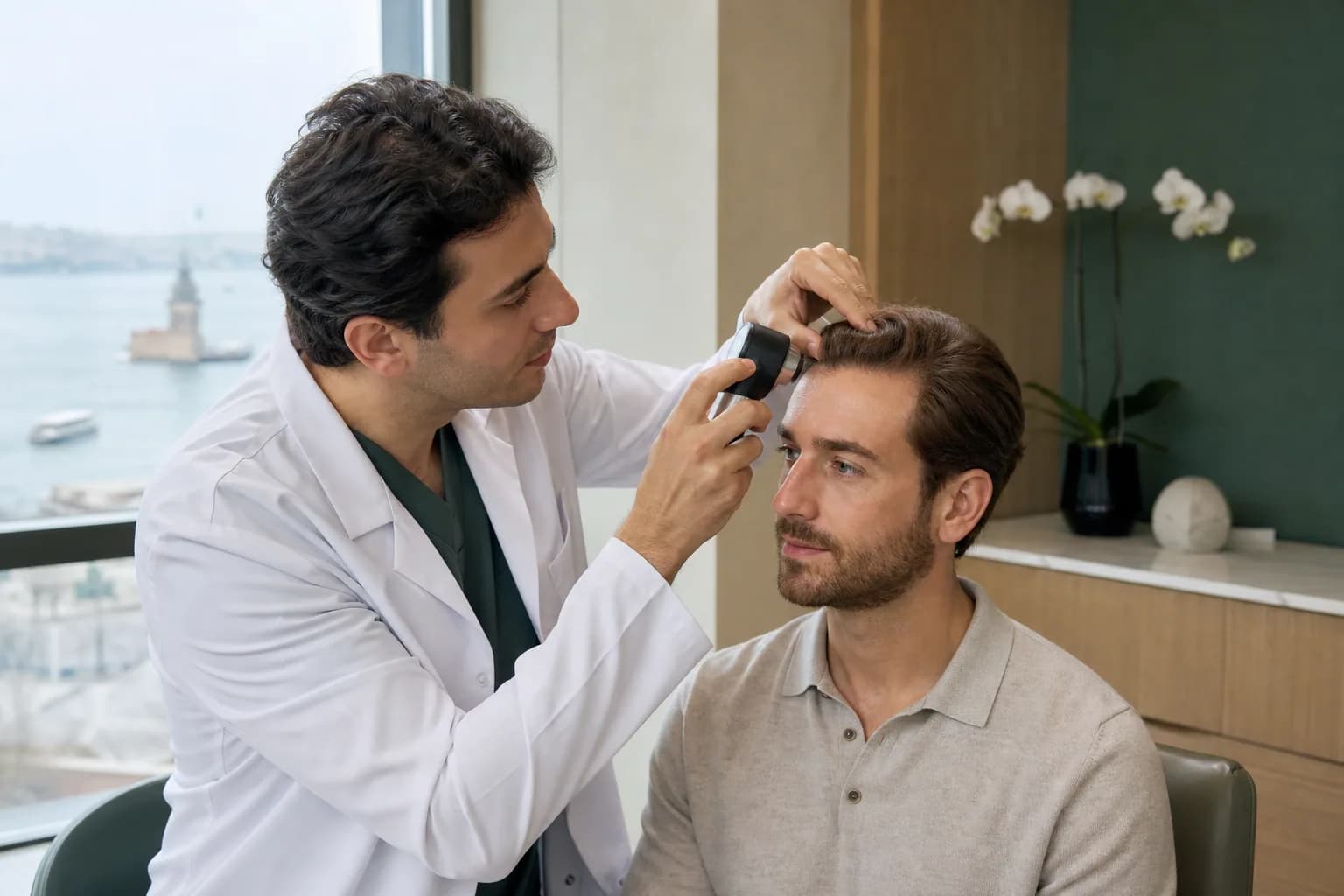
Assessment includes examination of the scalp and donor area, sometimes with magnification, discussion of family history and progression, and an honest conversation about coverage. A specific graft number quoted before examination is a sales figure, not a plan.
How the treatment generally works
In general terms: local anaesthesia, harvesting of follicular units from the donor area, preparation of recipient sites, and placement of the grafts. The procedure takes several hours and is usually performed as a day case.
Preparation
Follow the clinic’s instructions on medication, alcohol, smoking and hair length. Tell the physician about any medical treatment for hair loss you are already taking, and about blood-thinning medication.
Recovery and what to expect
Crusting and redness in the recipient area and soreness in the donor area are usual early on, with specific washing instructions from the clinic. Transplanted hairs typically shed within the first weeks before regrowth begins — this is expected, not a failure.
Visible change develops over months, and the final appearance takes considerably longer than most people expect.
Risks and important considerations
Risks include infection, bleeding, scarring in the donor or recipient area, shock loss of existing hair, folliculitis, numbness, uneven growth or density, poor graft survival, an unnatural hairline design, and the need for further procedures.
Alternatives and related options
Medical treatment for hair loss, treatment of an underlying medical cause, camouflage options, and accepting the loss are all legitimate choices. Medical management is often recommended alongside a transplant rather than instead of it.
International travel considerations
The procedure itself is usually a single day, but the days after it involve specific washing and care instructions, sun protection and avoiding pressure on the recipient area — all of which affect travel plans. Confirm aftercare and follow-up arrangements before booking a return flight.
How Wadi coordinates the journey
Medical assessment, diagnosis and treatment are provided by the relevant licensed healthcare institution and physician. Wadi Health Tourism coordinates the international patient journey and related intermediary services.
Common questions
The transplanted hairs usually shed within the first weeks; the follicles remain and regrowth follows over months. Your physician will describe the expected pattern.
That can only be answered after examining your donor area and the area to be covered. A number quoted before an examination is not a clinical assessment.
Possibly, particularly if loss continues. This should be discussed as part of the original plan rather than raised afterwards.
Related treatments
Hormone assessment
Symptoms often attributed to hormones — fatigue, weight change, poor sleep, low mood, reduced libido — have many possible causes. A proper assessment identifies which apply to you, and frequently concludes that hormone therapy is not the answer.
Hormone assessmentDentistrySmile design
“Smile design” describes a planning process, not a single treatment. Depending on the case it may involve gum treatment, orthodontics, restorative work, whitening, or a combination — and sometimes far less than a patient expected.
Smile designAwaiting medical review
This page has been prepared by the editorial team and is queued for review by a qualified physician. It is published for information and is not indexed until that review is complete.
Last updated September 1, 2026
This content is for general information and does not replace an individual medical assessment. Treatment suitability, technique, expected recovery and possible risks vary by patient and must be evaluated by a qualified physician.
Start with a simple conversation.
Receive information about the coordination process and the healthcare partners available for your request.
We do not publish treatment prices. Any estimate depends on an individual clinical assessment and is provided by the treating healthcare institution.